
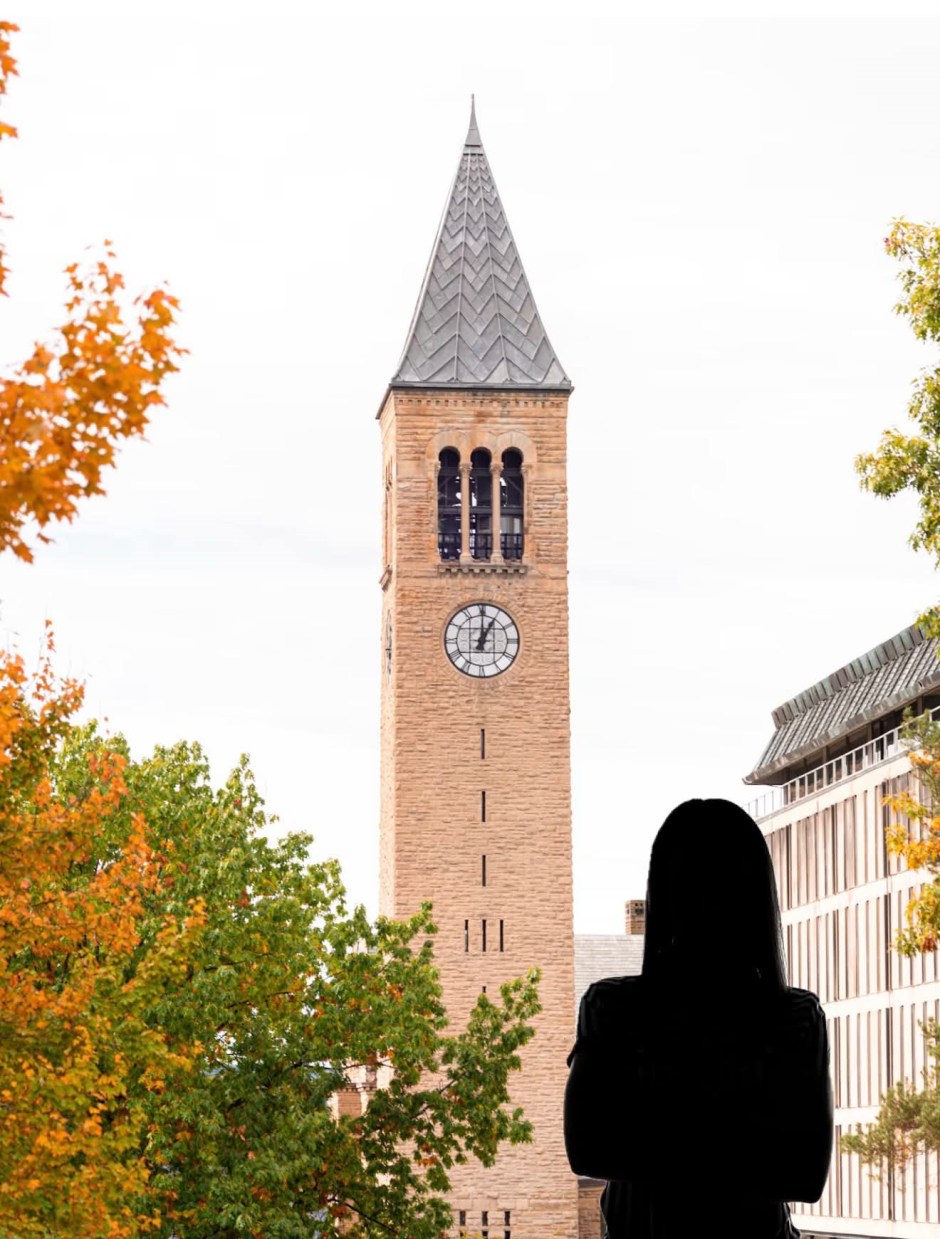
Una mujer x Siete horas entre Siete hombres=Un chat lleno de 57 silencios.
Una joven de apenas 20 años denunció haber sido drogada y agredida sexualmente por siete integrantes de una fraternidad universitaria (Cornell University). Según la demanda civil, los hechos ocurrieron en octubre de 2024 y se prolongaron durante horas. Los mensajes de un chat de Snapchat forman parte de las pruebas que han salido a la luz. La investigación criminal fue reabierta el 28 de septiembre de 2026 y el caso será presentado ante un gran jurado. Las acusaciones aún están bajo investigación.
Siete hombres señalados en una demanda por una agresión que habría durado horas.
Y, según las conversaciones que han circulado, decenas de integrantes de un chat de la fraternidad tenían conocimiento de lo que estaba ocurriendo.
Cincuenta y siete hombres.
No sé ustedes, pero a mí ese número me quita el sueño.
Porque no estamos hablando solamente de siete hombres acusados de cometer algo terrible. Estamos hablando de todos los demás que pudieron haber visto mensajes, entendido lo que sucedía y tenido la oportunidad de hacer algo.
¿Dónde estaban los amigos?
¿Dónde estaba el muchacho que pudo haber dicho: «Esto está mal. Voy a llamar a alguien»?
¿Dónde estaba el que pudo haber avisado a seguridad, a la policía, a un adulto, a quien fuera?
¿En qué momento se volvió más importante proteger la amistad de un compañero que la vida y la dignidad de una mujer?
Y aquí es donde me entra el miedo.
Porque esos muchachos no nacieron en una fraternidad. Alguna vez fueron bebés. Alguien los cargó, les dio de comer, les compró sus uniformes, les enseñó a cruzar la calle y lloró el día que se fueron a la universidad.
Alguien los ama.
Y seguramente muchas de sus madres jamás imaginaron que sus hijos pudieran estar relacionados con una historia como esta.
¿Qué estamos haciendo mal las madres?
Soy mamá de dos, una niña y un niño. Y si algo he aprendido en este camino es que criar a un hijo no es solamente enseñarle a defenderse del mundo. También es enseñarle a no convertirse en el peligro del mundo para alguien más.
A veces me pregunto si le he dicho suficientes veces que no basta con no hacer daño.
Que no basta con ser el muchacho que no golpea, que no abusa, que no insulta, que no se aprovecha de una mujer.
Que también hay que ser el hombre que interviene cuando otro lo hace.
El que no se ríe del chiste machista para encajar con los amigos.
El que no participa en conversaciones donde las mujeres son tratadas como objetos.
El que no se queda callado cuando escucha que un compañero presume de haber abusado de alguien.
El que entiende que una mujer inconsciente, intoxicada o incapaz de expresar su voluntad no está dando su consentimiento.
El que sabe que un «no» es suficiente, pero que el silencio, el miedo y la incapacidad de defenderse jamás significan un «sí».
Y me pregunto: ¿cuántas veces, como madres, nos concentramos tanto en enseñarles a nuestros hijos a ser buenos estudiantes, buenos profesionistas y buenos proveedores, que olvidamos enseñarles a ser buenos seres humanos?
¿De qué sirve que mi hijo tenga tres títulos universitarios, una empresa exitosa y una cuenta bancaria llena, si no tiene la sensibilidad de detenerse cuando alguien está sufriendo?
¿De qué sirve que sea el orgullo de su familia si es incapaz de ser un hombre seguro para una mujer?
Yo no quiero dejarle al mundo un hombre perfecto. Quiero dejarle un hombre decente.
Un hombre que sepa que la masculinidad no se demuestra dominando a nadie. Que la fuerza no está en intimidar. Que ser hombre no es tener permiso para hacer lo que se te dé la gana.
Y que jamás, jamás, la dignidad de una mujer es moneda de cambio para pertenecer a un grupo de amigos.
Nosotras vivimos con miedo. Ellos no deberían vivir con impunidad.
Hay algo que me parece profundamente injusto.
A nosotras nos enseñan a cuidarnos desde niñas.
No te pongas esa falda. No camines sola. Mándame tu ubicación. Avísame cuando llegues. No aceptes bebidas. No confíes demasiado. No te subas al carro de un desconocido. No regreses tarde. No provoques.
Crecemos aprendiendo a calcular riesgos que no deberían ser nuestra responsabilidad.
Y aun haciendo todo eso, seguimos expuestas.
Porque la joven de Cornell, según su demanda, estaba en un lugar donde había personas que conocía. No estamos hablando simplemente de una desconocida caminando sola por una calle oscura.
Estamos hablando de la posibilidad de que el peligro venga de alguien a quien le tienes confianza.
Y eso es lo que nos rompe.
¿Cómo le explicas a una hija que debe cuidarse de los desconocidos, pero también de los conocidos?
¿Cómo le dices que vaya a la universidad, que disfrute su juventud, que haga amigos, que viva, que ame, que viaje, que salga a bailar, pero que al mismo tiempo tenga que estar alerta porque alguien podría decidir que su cuerpo le pertenece?
Y lo más triste es que muchas veces, cuando una mujer denuncia algo, la primera pregunta no es qué le hicieron.
Es qué estaba haciendo ella.
¿Había tomado? ¿Por qué fue a esa fiesta? ¿Por qué confió? ¿Por qué no se fue antes?
(Aquí suspiro)
¿En qué momento dejamos de preguntarnos por qué alguien decidió hacerle daño?
La responsabilidad de una agresión es de quien la comete. No de la ropa que llevaba una mujer, ni de la bebida que aceptó, ni de la confianza que depositó en alguien.
Y tampoco podemos seguir criando generaciones de hombres que confundan el silencio de sus amigos con una autorización para hacer cualquier cosa.
El silencio no siempre es neutral. Cuando alguien sabe que otra persona está siendo lastimada y tiene la posibilidad de buscar ayuda, quedarse callado puede convertirse en parte del problema.
Las mujeres tenemos miedo. Y las madres de hijos hombrecitos, también.
Hay noticias que una quisiera no leer. Noticias que te revuelven el estómago, te enchilan el alma y te dejan viendo al techo, preguntándote en qué momento nos convertimos en una sociedad donde ser mujer puede ser tan peligroso.
Lo que está sucediendo con el caso de Cornell University me tiene pensando en algo que pocas veces me atrevo a decir en voz alta: ¿qué podemos hacer las madres para dejar buenos hombres en el mundo?
Porque una cosa es criar a un hijo para que sea exitoso, educado, trabajador y respetuoso. Y otra, muy distinta, es criarlo para que sea un hombre que jamás permita que una mujer sea humillada, lastimada o despojada de su dignidad frente a sus ojos.
Y hoy, después de leer lo ocurrido en Cornell, esa responsabilidad me pesa más que nunca.
No quiero criar a un hombre que solamente sea bueno conmigo.
Esta es quizá la parte más importante de todo lo que quiero decir.
Yo no quiero que mi hijo sea respetuoso con las mujeres solamente porque tiene una mamá, una hermana, tías, primas, abuelas o amigas a quienes ama.
No quiero que su respeto dependa de que la mujer sea alguien de su familia.
Quiero que respete a la mujer que no conoce. A la que está sola en una fiesta. A la que está intoxicada. A la que no le gusta. A la que lo rechaza. A la que piensa diferente. A la que jamás podría ofrecerle absolutamente nada a cambio.
Porque el respeto no es un premio que se le da a una mujer por portarse como nosotros queremos.
Es un derecho que tiene por el simple hecho de ser persona.
Y quiero que mi hijo sepa que sus amigos no siempre tienen la razón. Que pertenecer a un grupo no significa renunciar a su conciencia. Que si veinte, cincuenta o cien hombres se están burlando de una mujer, él tiene la obligación moral de preguntarse qué está pasando.
Que ser el único que dice «esto está mal» no lo hace menos hombre.
Lo hace responsable.
Y si alguna vez tiene que elegir entre encajar con sus amigos y defender a una mujer que está en peligro, espero haberle enseñado lo suficiente para que sepa qué hacer.
No espero que sea un superhéroe. Espero que tenga el valor de llamar a alguien, pedir ayuda, intervenir de manera segura y no mirar hacia otro lado.
Porque algún día mi hijo estará en una fiesta, en un trabajo, en una reunión o en cualquier lugar donde alguien necesite que otro ser humano haga lo correcto.
Y yo no voy a estar ahí para decirle qué hacer.
Eso me aterra.
Pero también me recuerda que todavía estoy a tiempo de enseñarle.
El mundo que quiero dejarle a mi hijo
A veces pienso que las madres queremos proteger tanto a nuestros hijos que olvidamos que también tenemos que prepararlos para proteger a otros.
No desde la violencia. No desde el machismo disfrazado de caballerosidad. No desde la idea de que una mujer necesita que un hombre la salve.
Sino desde la empatía, la responsabilidad y el respeto.
Quiero que mi hijo sea un hombre que no necesite que su mamá esté presente para comportarse correctamente.
Que no necesite que una cámara lo esté grabando para defender a alguien.
Que no necesite que la víctima sea su hermana para entender que lo que le están haciendo está mal.
Y quiero que sepa que, si alguna vez se equivoca, tendrá que asumir las consecuencias. Porque educar no es enseñarle a un hijo que siempre tiene la razón. Es enseñarle que sus decisiones tienen consecuencias y que pedir perdón no borra automáticamente el daño que ha causado.
No puedo controlar todas las decisiones que tomará mi hijo. Ninguna madre puede.
Pero sí puedo seguir hablándole. Puedo enseñarle con el ejemplo. Puedo cuestionar sus actitudes, sus bromas, sus silencios. Puedo recordarle que la educación no termina cuando se gradúa y que la hombría no se mide por la cantidad de mujeres que conquista, sino por la calidad del ser humano que decide ser.
Y puedo rezar, con todo mi corazón, para que el día que yo no esté cerca, él sea capaz de hacer lo correcto, incluso cuando hacerlo le cueste una amistad.
Porque hoy tengo miedo.
Miedo por mi hija, por mis amigas, por las jóvenes que salen a estudiar, por las mujeres que confían en alguien y por todas aquellas que nunca tuvieron la oportunidad de contar su historia.
Miedo de que sigamos normalizando conversaciones, bromas y conductas que convierten a las mujeres en objetos.
Miedo de que haya madres criando hijos maravillosos en casa, sin saber lo que esos mismos hijos permiten o celebran cuando están con sus amigos.
Y miedo, sobre todo, de que nos acostumbremos.
De que mañana aparezca otra noticia, otra víctima, otro chat, otros nombres y volvamos a indignarnos durante unos días para después seguir con nuestra vida.
No quiero acostumbrarme.
No quiero que mi hija tenga que vivir con miedo.
No quiero que mi hijo crezca pensando que ser un buen hombre consiste únicamente en no ser uno de los siete.
Quiero que entienda que también pudo haber sido uno de los cincuenta que tuvieron la oportunidad de hacer algo.
Y que el día que alguien le pregunte qué clase de hombre es, su respuesta no sea lo que dice su currículum, cuánto dinero gana o a qué universidad fue.
Que su respuesta esté en cómo trata a los demás cuando nadie lo está mirando.
Porque al final, como mamá, no quiero que el mundo solamente recuerde mi nombre por lo que hice, por lo que escribí o por lo que construí.
Quiero que, cuando yo ya no esté, el mundo sea un lugar un poquito más seguro porque yo crié a un buen hombre.
Y hoy, después de leer lo de Cornell, me queda más claro que nunca: esa es una de las responsabilidades más grandes y más difíciles que tenemos las madres de hombrecitos.
No criar hombres que solamente sean buenos.
Criar hombres que no permitan que el mundo siga siendo tan malo para las mujeres.
(Ya se que hablo de lo que quiero que sea mi hijo en el futuro, pero la verdad, YA LO ES). 🙂
Nos vemos a la próxima.
1×7÷7=57
1 woman. Times Seven hours. Divided by Seven men. Equals a chat group filled with 57 silences
.
A young woman, barely 20 years old, reported being drugged and sexually assaulted by seven members of a university fraternity (Cornell University). According to the civil lawsuit, the events took place in October 2024 and lasted for hours. Messages from a Snapchat group are among the pieces of evidence that have come to light. The criminal investigation was reopened on September 28, 2026, and the case will be presented to a grand jury. The allegations remain under investigation.
Seven men named in a lawsuit regarding an assault that allegedly lasted for hours.
And, according to the conversations that have circulated, dozens of members of the fraternity’s chat group knew what was happening.
Fifty-seven men.
I don’t know about you, but that number keeps me up at night.
Because we aren’t just talking about seven men accused of committing a terrible act. We are talking about all the others who might have seen the messages, understood what was happening, and had the chance to do something.
Where were the friends?
Where was the young man who could have said, “This is wrong. I’m going to call someone”?
Where was the one who could have alerted security, the police, an adult—anyone?
At what point did protecting a friend’s bond become more important than a woman’s life and dignity?
And this is where the fear sets in for me.
Because those young men weren’t born in a fraternity. They were once babies. Someone held them, fed them, bought their school uniforms, taught them how to cross the street, and cried the day they left for college.
Someone loves them.
And surely, many of their mothers never imagined their sons could be linked to a story like this.
What are we mothers doing wrong? I am a mother of two: a girl and a boy. And if I’ve learned anything along this journey, it’s that raising a son isn’t just about teaching him how to defend himself against the world. It’s also about teaching him not to become a danger to someone else.
Sometimes I wonder if I’ve told him enough times that simply not causing harm isn’t enough.
That it’s not enough to be the boy who doesn’t hit, abuse, insult, or take advantage of a woman.
That one must also be the man who steps in when someone else does those things.
The one who doesn’t laugh at a sexist joke just to fit in with his friends.
The one who doesn’t take part in conversations where women are treated like objects.
The one who doesn’t stay silent when he hears a peer bragging about having abused someone.
The one who understands that a woman who is unconscious, intoxicated, or unable to express her will is not giving consent.
The one who knows that a “no” is enough, but that silence, fear, and the inability to defend oneself never mean “yes.”
And I ask myself: how often, as mothers, do we focus so much on teaching our sons to be good students, successful professionals, and good providers that we forget to teach them to be good human beings?
What good is it if my son has three university degrees, a successful business, and a full bank account, if he lacks the sensitivity to stop when someone else is suffering?
What good is it if he is his family’s pride and joy, yet is incapable of being a man with whom a woman feels safe?
I don’t want to leave the world a perfect man. I want to leave it a decent man.
A man who knows that masculinity isn’t proven by dominating anyone. That strength isn’t found in intimidation. That being a man doesn’t give you permission to do whatever you please. And let it be clear: a woman’s dignity is never, ever a bargaining chip for belonging to a group of friends.
We live in fear. They should not live with impunity.
There is something that strikes me as deeply unfair.
We are taught to look out for our own safety from the time we are little girls.
Don’t wear that skirt. Don’t walk alone. Send me your location. Let me know when you get there. Don’t accept drinks. Don’t trust too easily. Don’t get into a stranger’s car. Don’t come home late. Don’t provoke anyone.
We grow up learning to calculate risks that shouldn’t be our responsibility.
And even doing all that, we remain vulnerable.
Because the young woman from Cornell, according to her lawsuit, was in a place where there were people she knew. We aren’t just talking about a stranger walking alone down a dark street.
We are talking about the possibility that danger comes from someone you trust.
And that is what breaks us.
How do you explain to a daughter that she must guard against strangers, but also against people she knows?
How do you tell her to go to college, enjoy her youth, make friends, live, love, travel, and go out dancing, while at the same time remaining on guard because someone might decide that her body belongs to them?
And the saddest part is that, often, when a woman reports something, the first question isn’t what was done to her.
It’s about what she was doing.
Had she been drinking? Why did she go to that party? Why did she trust them? Why didn’t she leave sooner?
(I sigh here)
At what point did we stop asking why someone decided to hurt her?
Responsibility for an assault lies with the person who commits it. Not with the clothes a woman wore, the drink she accepted, or the trust she placed in someone.
And we cannot keep raising generations of men who mistake their friends’ silence for permission to do whatever they please.
Silence isn’t always neutral. When someone knows another person is being hurt and has the chance to seek help, staying quiet can become part of the problem.
We women are afraid. And so are the mothers of boys.
There are news stories one wishes one didn’t have to read. Stories that turn your stomach, make your soul burn with anguish, and leave you staring at the ceiling, wondering when we became a society where being a woman can be so dangerous.
What is happening with the Cornell University case has me thinking about something I rarely dare to say out loud: what can we mothers do to send good men out into the world?
Because it is one thing to raise a son to be successful, well-mannered, hardworking, and respectful. And it is something else entirely to raise him to be a man who would never allow a woman to be humiliated, hurt, or stripped of her dignity right before his eyes.
And today, after reading about what happened at Cornell, that responsibility weighs more heavily on me than ever.
I don’t want to raise a man who is only good to me.
This is perhaps the most important part of everything I want to say.
I don’t want my son to be respectful toward women simply because he has a mother, a sister, a grandmother, or female friends whom he loves.
I don’t want his respect to depend on the woman being a member of his family. I want him to respect the woman he doesn’t know. The one standing alone at a party. The one who is intoxicated. The one he isn’t attracted to. The one who rejects him. The one who holds different views. The one who could never offer him absolutely anything in return.
Because respect isn’t a prize awarded to a woman for behaving the way we want her to.
It is a right she possesses simply by virtue of being a human being.
And I want my son to know that his friends aren’t always right. That belonging to a group doesn’t mean abandoning his conscience. That if twenty, fifty, or a hundred men are mocking a woman, he has a moral obligation to ask himself what is going on.
That being the only one to say “this is wrong” doesn’t make him less of a man.
It makes him responsible.
And if he ever has to choose between fitting in with his friends and defending a woman in danger, I hope I’ve taught him enough to know what to do.
I don’t expect him to be a superhero. I hope he has the courage to call someone, ask for help, intervene safely, and not look the other way.
Because someday my son will be at a party, at work, at a gathering, or anywhere else where someone needs another human being to do the right thing.
And I won’t be there to tell him what to do.
That terrifies me.
But it also reminds me that there is still time to teach him.
The world I want to leave my son
Sometimes I think we mothers want to protect our children so much that we forget we also need to prepare them to protect others.
Not through violence. Not through chauvinism disguised as chivalry. Not through the idea that a woman needs a man to save her.
But through empathy, responsibility, and respect.
I want my son to be a man who doesn’t need his mom present to behave properly. I want him not to need a camera recording him in order to stand up for someone.
I want him not to need the victim to be his own sister to understand that what is being done to her is wrong.
And I want him to know that if he ever makes a mistake, he will have to face the consequences. Because raising a child isn’t about teaching him that he is always right; it’s about teaching him that his decisions have consequences and that apologizing doesn’t automatically erase the harm he has caused.
I cannot control every decision my son will make. No mother can.
But I can keep talking to him. I can lead by example. I can question his attitudes, his jokes, and his silences. I can remind him that education doesn’t end at graduation and that manhood isn’t measured by the number of women he conquers, but by the quality of the human being he chooses to be.
And I can pray, with all my heart, that the day I am no longer around, he will be capable of doing the right thing—even if doing so costs him a friendship.
Because today, I am afraid.
Afraid for my daughter, for my friends, for the young women heading off to study, for the women who place their trust in someone, and for all those who never had the chance to tell their stories.
I fear that we will continue to normalize conversations, jokes, and behaviors that turn women into objects.
I fear there are mothers raising wonderful sons at home, unaware of what those very sons condone or celebrate when they are with their friends.
And I fear, above all, that we will become desensitized.
That tomorrow another news story will break: another victim, another group chat, other names—and we will feel outraged for a few days, only to go right back to our lives.
I don’t want to get used to it.
I don’t want my daughter to have to live in fear.
I don’t want my son to grow up thinking that being a good man simply means not being one of “the seven.”
I want him to understand that he could just as easily have been one of the fifty who had the chance to do something.
And that the day someone asks him what kind of man he is, his answer won’t be about his résumé, how much money he makes, or which university he attended.
I want his answer to lie in how he treats others when no one is watching.
Because ultimately, as a mom, I don’t want the world to remember my name only for what I did, what I wrote, or what I built.
I want the world to be a slightly safer place when I’m gone because I raised a good man.
And today, after reading about the Cornell incident, it is clearer to me than ever: this is one of the greatest and most difficult responsibilities we mothers of little boys have.
Not just raising men who are good.
Raising men who won’t let the world continue to be so cruel to women.
(I speak of the man I want my son to be, but the truth is… he already is.)
See you next time.

